


Seaweed calcium: a natural source of calcium for homemade cat food
Calcium is an essential mineral in every homemade cat food recipe, especially when bones are not included. In a natural prey diet, cats obtain calcium and other minerals by consuming the bones of their prey. When preparing homemade cat food without bones, an additional calcium source is needed to provide the minerals that would naturally come from bones.
Muscle meat and organ meat provide many important nutrients for cats, but they do not contain enough calcium to balance the naturally higher phosphorus content found in meat. Calcium and phosphorus need to be provided in the right balance, as both minerals work together in many important processes within the body.
A diet without an appropriate source of calcium may not provide the mineral balance needed to maintain normal bone structure. Therefore, calcium is an essential part of a properly balanced homemade cat food recipe.
Seaweed calcium as a natural calcium source
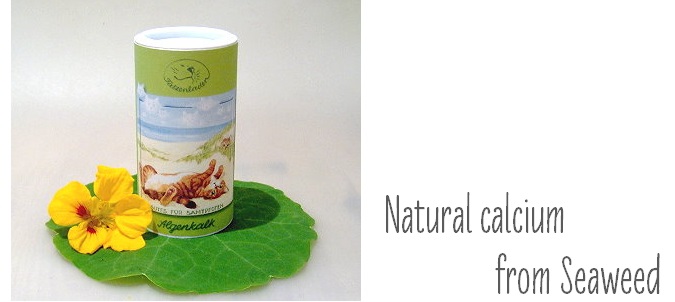
Seaweed calcium is derived from the marine algae Lithothamnion calcareum and is a natural source of calcium. It also contains naturally occurring trace minerals, including magnesium, zinc, and iron.
Because seaweed calcium is a non-animal source of calcium, it can be an alternative option for cat owners who prefer a plant-derived calcium source or who need to consider specific dietary requirements. When used in homemade cat food, it provides calcium to help balance recipes that do not contain bones.
Calcium is needed for
- maintaining normal bone structure
- normal muscle function
- normal cell function and renewal
- normal heart function
- normal nerve signalling
- normal blood clotting
- normal energy metabolism
Seaweed calcium should be used according to a recipe. When preparing homemade cat food without bones, always consider the calcium-to-phosphorus ratio of the complete diet. A calcium-to-phosphorus ratio of approximately 1.1:1 to 1.3:1 is commonly used when formulating homemade diets.
As a general guideline, use approximately 6 g of seaweed calcium powder per 1,000 g of fresh boneless meat (with or without organ meat) to help balance the calcium content of the recipe.
Please note:
Unlike whole bone powder, seaweed calcium provides mainly calcium and only small amounts of phosphorus. While it can be used as a calcium source when preparing homemade cat food without bones, adding calcium to meat alone does not make a complete and balanced diet. The overall recipe should provide an appropriate balance of calcium and phosphorus based on the ingredients used.
Phosphorus is naturally present in meat and other animal-based ingredients and is also an essential mineral in a cat’s diet. When preparing homemade cat food, both calcium and phosphorus should be considered as part of a balanced recipe.